Due Date: May 9th @ 10a (submit electronically, either via Angel dropbox or by email to the instructor)
In this 3-4 page, typed paper reflect on any of the following questions (i.e. you should choose only one to answer). You can provide a narrative paper (in which you clearly talk about your experience), a critical approach (in which you critique and suggest), a persuasive strategy or another style of delivery. What matters in this paper is that in your answer you provide a comprehensive, thoughtful, and detailed response:
1. Socrates argues that justice is health to the soul and provides a full basis for living the good life. Descartes argues that we can be perfect by aligning our wills with our intellectual levels of understanding. What is your conception of "the good life"?
2. To what extent does modern science and technology take into account the epistemological considerations raised by Descartes and Hume? That is, aren't we coming to a greater understanding of the universe and will one day have a relatively complete knowledge of it or are we hopelessly unable to reach such a standpoint? Is there a third alternative here?
3. How have our philosophers shown you either adequate ways to answer this question or insufficient bases for answering it: Does God/gods exist?
4. Address your own question that has been raised for you in this course and provide in this paper some kind of an answer to that question. For this option, submit your question to the instructor no later than Tuesday, May 3, at 930a.
Wednesday, April 20, 2011


Monday, March 21, 2011
Hume's Skepticism
This week we'll be covering Hume's Treatise on Human Nature. Be sure to bring the reading to class (either in physical or virtual form) as we will be specifically referring to the text.
The main question to consider in Hume's account (and that you are considering within your short writing assignment before tomorrow morning) is: where do ideas come from? His answer can be stated forthrightly and simply and he provides us with a clear explanation as to why he answers the question as he does.
However, this is not the whole story. Consider the implications of this position for any and all of our ideas and bring with you an example that we can consider as a group so as to test out this idea.
Thursday, March 10, 2011
Descartes' Proof of the Existence of the External World as Independent from the Thinking Subject
I have no clear and distinct perception of the existence of bodies. My perception of a body as existing is consistent both with that body’s existence and with its non-existence (e.g. if I am dreaming or hallucinating). Descartes nonetheless claims that we are justified in our belief that the senses are generally reliable indicators of the existence of external objects (CSM 115-6).
(1) I have a passive faculty of sensory perception (of getting and recognizing ideas of sensible objects).
(2) I could not have such a faculty unless there existed some active power, either in myself or in something else, to produce the ideas.
(3) This power cannot exist in me, for it presupposes no action of my intellect; sensory ideas are
produced without my cooperation and often against my will.
(4) So, the power inheres in some substance other than myself.
(5) This substance must contain at least as much formal reality as exists objectively in my sensory ideas.
(6) So, this substance is either a body, which contains whatever is contained objectively in my ideas; or it is God or some other creature superior to a body, which contains the reality of my ideas in a higher form (eminently).
(7) But God has given me no faculty to discover the origin of my sensory ideas and a strong
inclination to believe that these ideas proceed from bodies.
(8) If God were to cause these ideas in me, either directly or by means of some creature other than
bodies, God would be a deceiver.
(9) God is not a deceiver.
(10) Therefore, bodies exist.
Tuesday, March 8, 2011
Meditation III
Here is a formal way to see Descartes' progression of reasoning from the idea of the thinking subject to the infinite substance in the language of the text:
Meditation III
1. 'Cogito Ergo Sum' is an objective reality
2. The formal reality is equal to, if not greater than, the reality which exists objectively
3. The objective reality has an idea of perfection, though lacks perfection itself
4. 'Something cannot come into being out of nothing'
5. 'What is perfect cannot come into being from what is imperfect'
6. The formal reality must have caused the idea of perfection within the objective reality
______________________________________________________
Therefore, the formal reality must be perfect
Friday, February 25, 2011
Modern Philosophy: Descartes & Hume
Over the next few weeks we'll be dealing with the problem of skepticism, both in the work of Descartes and Hume. You can find here assigned readings from Hume's Treatise on Human Nature.
For next week's class pertaining to Descartes Meditations, chapters III-VI, be sure to consider how he arrives at his certain, foundational truths (which he counts as knowledge) and by chapter VI, how it is that he finally establishes the truth of sense-certainty.
Additionally, if you really want to get a full sense of the book, check out these films I've posted trailers to here and, even better, watch them in the entirety! You'll feel the force of the arguments much more clearly if you do so.
Tuesday, February 8, 2011
The Individual and the Kallipolis
After our discussion today, consider the following issues:
1. Does the conception of education that Socrates presents in Book II make sense to you for the purpose of the auxiliary/guardian class? Does it make sense to extend this approach to education to the other classes in the Kallipolis as well (i.e. the ruler(s) and the craftspeople)?
2. Is this an anti-democratic state in which the individual is treated badly (whether we say their rights are violated or security is paramount and requires the curtailment of individual freedoms)? If you say yes, can it be both and anti-democratic city as well as a just city? If you say no, how does the individual flourish in this context?
3. Does Socrates' conception of the individual cohere with your own sense of what it means to be you, what it means to have an "I" perspective and how you see that "I" relating to the larger community of "I's" you are a part of?
4. Must we be ruled over?
5. Why not the city of pigs, Socrates' healthy city (371e-372e), as the basis for a theory of justice?
6. Can a city, in terms of its being a whole entity, be happy?
1. Does the conception of education that Socrates presents in Book II make sense to you for the purpose of the auxiliary/guardian class? Does it make sense to extend this approach to education to the other classes in the Kallipolis as well (i.e. the ruler(s) and the craftspeople)?
2. Is this an anti-democratic state in which the individual is treated badly (whether we say their rights are violated or security is paramount and requires the curtailment of individual freedoms)? If you say yes, can it be both and anti-democratic city as well as a just city? If you say no, how does the individual flourish in this context?
3. Does Socrates' conception of the individual cohere with your own sense of what it means to be you, what it means to have an "I" perspective and how you see that "I" relating to the larger community of "I's" you are a part of?
4. Must we be ruled over?
5. Why not the city of pigs, Socrates' healthy city (371e-372e), as the basis for a theory of justice?
6. Can a city, in terms of its being a whole entity, be happy?
Tuesday, January 25, 2011
The Challenges of Thrasymachus and Plato's response(s)
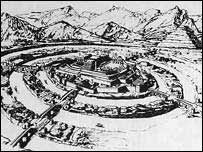
You can consider the following questions as you read these sections, but also come next Tuesday prepared to offer your own questions for Plato's conceptions of justice in the individual and justice in the state:
1. Pay particular attention to the opening scene of Book II and to emphasize this point, consider the following questions: What do Glaucon and Adeimantus bring forward which frame Socrates' response to Thrasymachus in Book II (starting essentially at 368)? That is, before 368 in Book II, we have both brothers of Plato asking Socrates to include certain considerations in his response - what are these things? what significant concerns are raised for Socrates?
2. In relation to these questions above, are these concerns taken into account in Socrates' account of justice in Books II & IV?
3. Would you want to live in Plato's world as a craftsperson, guardian or ruler?
Subscribe to:
Comments (Atom)